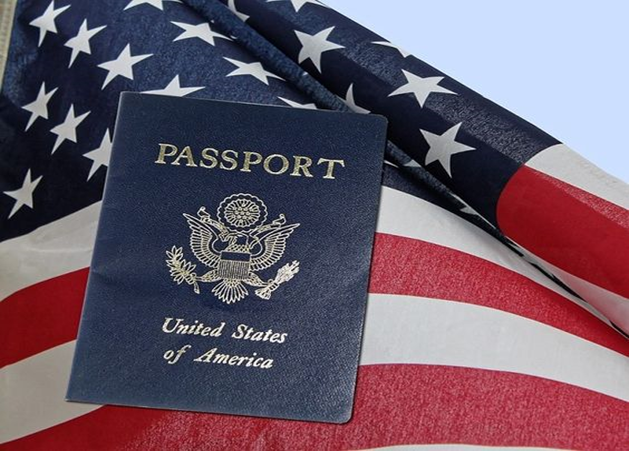
Vietnam E-Visa for American Citizens 2026: The Only Guide You Actually Need
Reviewed by: Stanley Ho | Last Updated: May 2026
If you’ve been Googling the Vietnam visa for American citizens and finding a pile of contradictory articles — some saying you need a visa, some implying you don’t, some describing a process involving approval letters and airport stamping counters — let me cut through the noise right now. Americans need a visa. The process for getting one in 2026 is cleaner and faster than it’s ever been. And the old Visa on Arrival approval letter system that half those outdated articles still describe? Dead. Gone. Do not book anything based on it.
Vietnam does not offer visa-free entry to US passport holders. Every American citizen — whether you’re flying direct on Vietnam Airlines from San Francisco, connecting through Seoul on Korean Air, routing through Tokyo on ANA, or taking the long way via Doha on Qatar Airways from any hub across the country — needs a valid Vietnam E-visa before boarding. That’s the rule in 2026 and there are no workarounds, no exceptions for short stays, and no “just show up and sort it out” option that ends well.
The 90-day Vietnam E-visa is applied for entirely online, approved digitally, and presented at the border as a PDF — either printed or on your phone screen. That’s it. For most Americans traveling from major gateways like Los Angeles (LAX), San Francisco (SFO), New York (JFK), Seattle (SEA), Chicago (ORD), or Dallas (DFW), sorting this out before you go is genuinely the easy part of the journey.

Vietnam E-Visa for American Citizens 2026: The Only Guide You Actually Need
Table of Contents
Vietnam E-Visa Requirements for American Citizens
The vietnam visa for American citizens is the E-visa: 90 days of stay per entry, available in single-entry or multiple-entry format. If you’re doing a longer Southeast Asia circuit — hopping into Cambodia for Angkor Wat, crossing to Laos for a few slow days on the Mekong, or dipping into Thailand — the multiple-entry option is the only sensible choice. The price difference is minimal; the flexibility is substantial.
Document checklist:
- US passport valid for at least 6 months beyond your intended departure date from Vietnam
- At least one fully blank visa page
- Digital passport photo: color, white background, full face visible, no sunglasses, no headwear (religious exceptions permitted if the entire face is clearly unobstructed), taken within the last 6 months
- Clear, sharp scan of your passport biographical data page
- Valid email address where your approval will be delivered
- International credit or debit card for the online fee
Standard processing: 3 business days. Urgent options run 24 to 48 hours for travelers applying close to departure. The fee is paid in USD at the time of application — there is no additional payment at the Vietnamese border. No cash, no separate counter, no stamping fee. The entire airport-desk layer is gone.
Denied Boarding at LAX: What Happens When Your Visa Isn’t Ready
It’s a Sunday evening at Los Angeles International Airport (LAX). Your Vietnam Airlines nonstop to Hồ Chí Minh City — one of the longer legs in commercial aviation at around 17 hours — boards in two hours. You’ve planned this trip for months. The check-in agent pulls up your booking, asks for the E-visa, and something is wrong.
Maybe the name on the E-visa reads “JENNIFER SMITH” but your passport, issued after your marriage six months ago, now reads “JENNIFER SMITH-CHEN” — and nobody thought to check that the visa matched the new document. Maybe the E-visa shows your middle name “Marie” but the form was submitted without it, and the Vietnamese system flags the discrepancy. Maybe the passport scan uploaded as a blurry JPEG that passed the portal’s file-size check but was ultimately rejected during processing, and the approval that arrived by email was a rejection notice nobody read carefully.
I’ve taken calls from LAX. From SFO. From JFK at 11 PM when someone’s connecting red-eye is already boarding. The USA–Vietnam routing via Asia is a 15-to-20-hour journey — missing a flight doesn’t mean a few hours of inconvenience. It means a day lost and a rebooking scramble.
If you are denied boarding due to a visa issue, disengage from the check-in desk on the visa question and call an emergency service immediately. Our Super Urgent Visa Service at VisaOnlineVietnam pushes new E-visa approvals through priority channels in 2 to 4 hours — fast enough to catch a rebooked same-day departure in many cases, and certainly fast enough to salvage a trip that would otherwise be lost.
💡 Expert Insight from Stanley Ho: “Over my 20+ years handling travel logistics, the most frequent disruption occurs at the check-in desk due to simple application formatting errors. If you are stuck at the airport and denied boarding, don’t panic—our emergency team can secure a new E-visa clearance through priority channels within hours, saving your flight.”
The American Passport Trap: Name Quirks That Break Vietnam E-Visa Applications
US passports look straightforward on the surface — clean Latin characters, no diacritics, everything printed clearly in English. And yet American travelers generate a surprising volume of E-visa name mismatches every year. Here’s why, and what to watch for.
The middle name problem. This is the single most common E-visa error I see from American applicants. The Vietnam E-visa portal has a field for middle name. The US passport prints the middle name in the “Given Names” field alongside the first name — so “JENNIFER MARIE SMITH” appears as Given Names: JENNIFER MARIE, Surname: SMITH. Many applicants either leave the middle name field blank (because they’re not used to having a dedicated middle name field on forms) or they enter only the first name. Both create a mismatch against the passport. Enter your middle name — or middle names — exactly as they appear on the biographical page. Every one of them.
The hyphenated surname trap. If you have a hyphenated surname — “Smith-Jones,” “Garcia-Lopez,” “Kim-Anderson” — it appears with the hyphen on the visual biographical page of your passport. In the Machine-Readable Zone at the bottom of the passport, that same hyphen is replaced by a filler character (a blank space or period, depending on the reader). The E-visa portal generally accepts either the hyphenated form or the space-separated form, but you must use one consistently across the entire application. The most reliable approach: enter it exactly as it appears on the printed biographical page, hyphen included.
Apostrophes in surnames. If your surname contains an apostrophe — O’Brien, O’Connor, D’Angelo — your US passport MRZ drops the apostrophe entirely. The visual page may or may not print it depending on the passport generation. For E-visa applications, use the form without the apostrophe: OBRIEN, OCONNOR, DANGELO. The Vietnamese system reads against the MRZ, and an apostrophe in the application will create an encoding mismatch.
Recently changed names. This is the crisis I see most often, and it catches American travelers completely off guard. You got married in December, changed your name, got a new passport in January, and applied for the E-visa in February. But you booked the flight in November — under your old name. Now you have a passport and E-visa in your new name but a flight booking in the old one. Or worse: you have a new passport but applied the E-visa with the old name out of habit. The passport is the source of truth. The E-visa must match the passport you will physically present at the Vietnamese border — not the name you’ve been using for years, not what’s in your email reservation. Check the passport date and check the name, then apply.
Generational suffixes. US passports include suffixes — Jr., Sr., II, III — in the given names field when the passport holder uses them legally. The E-visa form has a suffix field. If your passport includes “Jr.” or “III,” enter it. If it doesn’t appear on the biographical page, leave it blank.
The “goes by a different name” trap. Many Americans use a preferred name, a nickname, or a middle name as their primary name in daily life. It doesn’t matter. The E-visa is matched against the legal name printed on the passport. Enter the legal name exactly as it appears on the document.
Skip the Queue: VIP Fast-Track at Vietnam’s Airports
Americans flying from the US West Coast to Vietnam are typically in transit for 15 to 20 hours, often more with connections. East Coast travelers can add another 6 hours on top. By the time the plane touches down at Tan Son Nhat International Airport (SGN) in Hồ Chí Minh City or Noi Bai (HAN) in Hà Nội, the body has genuinely lost track of what continent it’s on, let alone what time it is.
The last thing you need after that journey is a 90-minute immigration queue. And peak-hour queues at SGN — when multiple wide-body inbounds arrive simultaneously — genuinely do reach that length.
The VIP Airport Fast-Track service bypasses all of it. A dedicated concierge meets you at the gate the moment you step off the aircraft — before the immigration hall, before the queue forms — and walks you through a priority lane. Luggage is prioritised. You’re in a taxi and on your way to the hotel while fellow passengers are still filling out forms standing up.
Available at Noi Bai (HAN), Tan Son Nhat (SGN), and Da Nang International (DAD). After a transpacific flight, I’d argue it’s not a luxury — it’s a recovery tool.
How to Apply for Your Vietnam E-Visa in 2026
Step by step, here’s how the process works:
- Go to the official Vietnamese immigration E-visa portal (evisa.xuatnhapcanh.gov.vn) or apply through VisaOnlineVietnam for professional name verification and document review before you submit — especially important if you’ve recently changed your name or have any of the formatting situations described above.
- Enter your personal details — surname exactly as printed on the passport biographical page, all given names including middle name(s), any suffix if printed on the passport. Apostrophes omitted. Hyphens included.
- Upload your passport photo and biographical page scan — both must be sharp, properly lit, and within the portal’s file size specifications. Blurry or oversized uploads are among the most common silent rejection triggers.
- Select your visa type: single or multiple entry, and your processing speed (standard 3 business days or urgent 24-48 hours).
- Pay online with an international credit or debit card. Save the payment confirmation.
- Receive your E-visa approval by email as a PDF within the stated window.
- Print or save digitally — Vietnamese immigration accepts both at all official entry points.
Present your US passport and E-visa together at the border. No additional fees. No separate counter. No approval letter theatre.
Frequently Asked Questions
Do American citizens need a visa to enter Vietnam in 2026? Yes, without exception. The vietnam visa for American citizens is mandatory regardless of trip length, purpose, or which state the passport was issued from. The US is not on Vietnam’s visa exemption list. The 90-day E-visa applied for online before departure is the only valid tourist entry mechanism. The Visa on Arrival approval letter system is completely obsolete — any service still offering it is dangerously out of date.
Do I need to include my middle name on the Vietnam E-visa application? Yes. If your middle name is printed on your US passport’s biographical page — and for most Americans it is — enter it in the middle name field of the E-visa application. Omitting it creates a mismatch against the passport that can cause problems at the Vietnamese border. Use the exact spelling shown on the passport.
How long is the Vietnam E-visa valid for American passport holders? The E-visa grants 90 days of stay per entry, on either a single or multiple-entry basis. The visa has a 90-day validity window from the date of issue within which your first entry must occur. For travelers planning a broader Southeast Asia trip with border crossings, the multiple-entry option is strongly recommended.
I recently changed my name after getting married — which name do I use? Use the name on the passport you will physically present at the Vietnamese border. If you have a new passport in your new name, the E-visa must be in the new name. If you still carry an old passport in your old name (and it’s still valid), the E-visa must match that. The passport is the source of truth — not your old bookings, not your old email address, not the name your coworkers know you by.
Is the Vietnam E-visa accepted at land border crossings and not only at airports? Yes. As of 2026, the E-visa is valid at all designated international entry points in Vietnam — international airports, international land border crossings, and international sea ports. American travelers are not restricted to specific entry airports, which is useful for travelers entering overland from Cambodia, Laos, or China.
About the Reviewer: Stanley Ho is the CEO of VisaOnlineVietnam and a recognized expert consultant in the international aviation and travel service industry. With decades of experience navigating complex immigration regulations, Stanley and his team specialize in providing seamless visa solutions, fast-track airport services, and emergency travel assistance for global citizens visiting Vietnam.