Vietnam E-Visa for Qatar Citizens 2026: The Only Guide You Actually Need
Reviewed by: Stanley Ho | Last Updated: May 2026
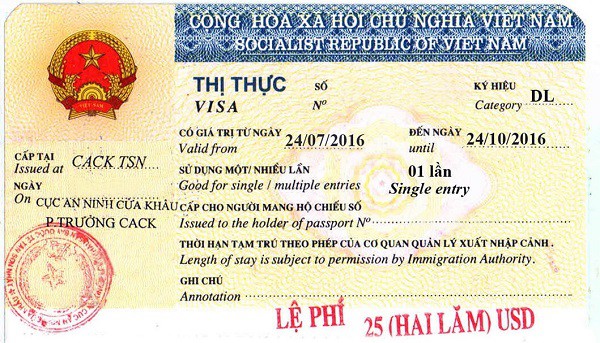
If you’re reading this to sort out the Vietnam visa for Qatar citizens in 2026, you’ve landed in the right place — and I want to be upfront with you about something before we go any further. Most of the guides you’ll find online for this topic were written years ago and describe a visa system that no longer legally exists. The approval letter, the airport stamping counter, the two-fee structure — all of it is gone. Dead. The Visa on Arrival system was retired, and any website still walking you through that process is selling you a ghost.
Vietnam does not grant Qatar citizens visa-free entry. The only valid tourist entry mechanism in 2026 is the 90-day Vietnam E-visa, applied for online before you travel, received as a digital document, and presented at the Vietnamese border alongside your passport. No letter. No stamping desk. No cash exchanged with an immigration officer at midnight after a long-haul flight from Doha.
Here’s the thing about Qatar-to-Vietnam travel that I find genuinely exciting from a logistics standpoint: Hamad International Airport is one of the finest transit hubs on the planet, and Qatar Airways operates direct or near-direct routing to Hồ Chí Minh City and Hà Nội that puts Qatari travelers in a genuinely enviable position compared to passengers connecting through three legs from the Americas. The flight is comfortable and the connections are clean. Getting the visa right is the only real friction — and it’s less friction than most people expect, as long as you understand the name-formatting issues specific to Qatari passports.

Vietnam E-Visa for Qatar Citizens 2026: The Only Guide You Actually Need
Table of Contents
Vietnam E-Visa Requirements for Qatar Citizens
The vietnam visa for Qatar citizens is a single digital document: the E-visa, valid for 90 days, available as single-entry or multiple-entry. If you’re planning a wider Southeast Asia itinerary — perhaps layering in Singapore, Thailand, or Cambodia — choose multiple-entry. It’s a marginal additional cost against the convenience of freely crossing in and out of Vietnam without reapplying.
Document checklist:
- Qatari passport valid for at least 6 months beyond your intended departure date from Vietnam
- At least one fully blank visa page
- Digital passport photo: color, white background, full face visible, no headwear (religious exceptions permitted provided the entire face is unobstructed), taken within the last 6 months
- Clear, sharp scan of your passport biographical data page
- Valid email address for delivery of the approval
- International credit or debit card for the online fee
Standard processing runs 3 business days. Urgent options exist for 24-to-48-hour delivery when you’re applying close to departure. The entire fee is paid online in USD at the time of application. There are zero additional charges at the Vietnamese airport. No counter. No stamping fee. No cash.
Denied Boarding at DOH: What Happens When Your Visa Isn’t Ready
Hamad International Airport (DOH) in Doha is not a place where you want documentation problems. It handles over 54 million passengers a year. The Qatar Airways check-in operation runs like a military exercise and moves fast. When a check-in agent flags a discrepancy between the name on your E-visa and the name on your Qatari passport — and this happens far more often than it should — the clock starts ticking immediately.
Your QR flight to Hồ Chí Minh City boards in ninety minutes. The name field on the E-visa reads “MOHAMMED AL THANI” but your passport shows “MOHAMMED BIN KHALID AL THANI.” The bin-chain was truncated during application because the applicant assumed the shortened form would be fine. It isn’t. Vietnamese immigration systems are literal. They match documents against documents. A name that doesn’t precisely replicate what’s on the passport is a mismatch, and a mismatch gets you pulled aside at best and denied entry at worst.
This is the most avoidable crisis in international travel and I’ve been intervening in it for twenty years.
If you are denied boarding at DOH due to a visa documentation issue, stop trying to argue your way past check-in — they can’t override immigration systems — and call an emergency visa service immediately. Our Super Urgent Visa Service at VisaOnlineVietnam can clear a new E-visa approval through priority channels in 2 to 4 hours, often fast enough to catch a rebooked same-day departure.
💡 Expert Insight from Stanley Ho: “Over my 20+ years handling travel logistics, the most frequent disruption occurs at the check-in desk due to simple application formatting errors. If you are stuck at the airport and denied boarding, don’t panic—our emergency team can secure a new E-visa clearance through priority channels within hours, saving your flight.”
The Qatari Passport Trap: Patronymic Chains and Al-Prefix Names That Break Applications
This is the section that matters most for Qatari travelers, and I want to work through it carefully because the naming structure of Qatari passports creates more E-visa application errors per capita than almost any nationality I deal with.
Qatari names follow a patronymic chain system rooted in Arabic Islamic tradition. A full Qatari name is structured as: given name + father’s given name + grandfather’s given name (and sometimes further ancestors) + tribal or family name. Each component after the first is connected by bin (son of) or bint (daughter of) for women. The tribal or family name typically begins with Al- (sometimes written El-). So a complete name might be:
Khalid bin Mohammed bin Abdulla Al-Attiyah
This presents an immediate structural clash with the Vietnam E-visa portal, which — like most Western-designed immigration systems — expects a clean split between “surname” and “given names.” Qatari passports handle this differently depending on when and where they were issued, and the romanization of the Arabic script introduces further variation. Here is what to watch for:
The bin-chain truncation problem. Many Qatari passport holders have had their full patronymic chain shortened on their passport biographical page due to field length constraints. “Khalid bin Mohammed bin Abdulla bin Jassim Al-Attiyah” may appear on the passport as “Khalid Mohammed Al-Attiyah” with the bin particles dropped entirely, or as “Khalid Bin Mohammed Al-Attiyah” with only one generation of ancestry. Enter exactly what is printed on your passport — not your full legal patronymic chain as you would recite it in Qatari social context. The E-visa must match the document.
“Bin” vs. “Ibn” inconsistency. Qatari passports romanize the Arabic particle ابن inconsistently depending on the issuing period and the official who processed the document. Your current passport might say “Bin” while an older national ID says “Ibn.” Use the spelling that appears on the passport you are travelling with. Never mix the two.
The “Al-” prefix variation. The definite article “Al” before a tribal name appears on passports sometimes as “Al-” (with hyphen), sometimes as “Al ” (with space), and sometimes embedded without separation — “AlThani” rather than “Al Thani” or “Al-Thani.” Copy it exactly as printed, hyphen and spacing included. Do not normalise it to a single standard form.
“Bint” for women. Female Qatari travelers whose passports include the particle “Bint” (daughter of) between given name and father’s name must include this on the E-visa application exactly as shown. Dropping it creates a mismatch. This is extremely common — many women assume bint is a middle component rather than a structural particle and omit it from foreign form fields.
Romanization of Arabic sounds. The same Arabic given name can be romanized multiple ways across different Qatari passport generations: “Mohammed,” “Muhammad,” “Mohamed,” “Muhammed.” The only correct version for your E-visa application is whatever appears on your current passport biographical page. Do not correct what feels like a misspelling. It is the official romanization of record.
When in doubt — and with Qatari names, doubt is appropriate — photograph your passport biographical page and have a professional review the name entry before submission. A ten-minute check has saved more than a few flights.
Skip the Queue: VIP Fast-Track at Vietnam’s Airports
Qatar Airways is, objectively, one of the finest airlines on earth. The Business Class cabin from Doha to Hồ Chí Minh City is a genuinely civilised experience. And then you land and join the immigration queue with everyone else from the four wide-body flights that arrived within the same 30-minute window, and the mood shifts. Vietnam’s airports process enormous passenger volumes and peak-hour queues at Tan Son Nhat (SGN) and Noi Bai (HAN) can run to 60, 90, occasionally 120 minutes depending on the time of arrival.
The VIP Airport Fast-Track service exists to solve this exactly. A personal concierge meets you at the aircraft gate — before the immigration hall — and escorts you through a dedicated priority lane. You skip the general queue entirely. Luggage is prioritised. You are in a taxi to your hotel while the rest of the arrivals hall is still working through the standard process.
Available at Noi Bai (HAN) in Hà Nội, Tan Son Nhat (SGN) in Hồ Chí Minh City, and Da Nang International (DAD). For Qatari travelers who’ve arrived on Qatar Airways Business Class, it is the logical extension of a premium journey. For anyone arriving after a long connection, it’s simply the rational choice.
How to Apply for Your Vietnam E-Visa in 2026
Here is the complete application process, step by step:
- Go to the official Vietnamese immigration E-visa portal (evisa.xuatnhapcanh.gov.vn) or apply through a trusted professional service like VisaOnlineVietnam for expert name-formatting review — strongly recommended for Qatari travelers given the complexity discussed above.
- Enter your personal details — surname and given names copied precisely from your passport biographical page, including “bin,” “bint,” “Al-” particles and all spacing exactly as printed. Do not simplify. Do not correct perceived inconsistencies.
- Upload your passport photo and biographical page scan — both must be clear, correctly lit, and within the portal’s file size requirements. Poor scans are among the most common silent rejection triggers.
- Select your visa type: single or multiple entry, and processing speed (standard 3 business days or urgent 24-48 hours).
- Pay online using an international credit or debit card. Save your payment confirmation separately.
- Receive your E-visa approval by email as a PDF document.
- Print or save digitally — Vietnamese immigration accepts both formats at all official entry points.
Present your Qatari passport and E-visa together at the Vietnamese border. No additional fees. No separate stamp counter. No approval letter theatre.
Frequently Asked Questions
Do Qatar citizens need a visa to visit Vietnam in 2026? Yes. Qatar is not on Vietnam’s visa exemption list, which means the vietnam visa for Qatar citizens is mandatory for all travel purposes. The only valid tourist entry mechanism in 2026 is the 90-day E-visa applied online before departure. The Visa on Arrival approval letter system is completely obsolete — do not use any service still offering it.
How do I handle my full Qatari patronymic name on the E-visa application? Enter your name exactly as it appears on your passport biographical page — bin/bint particles, Al- prefix, spacing, and hyphenation included. Do not use your full extended patronymic chain unless every element of it appears on the passport biographical page. The E-visa is matched against your passport document, not against Qatari civil records.
How long is the Vietnam E-visa valid for Qatar passport holders? The E-visa grants 90 days of stay per entry on either a single or multiple-entry basis. The visa itself has a 90-day validity window from the date of issuance within which you must make your first entry. Multiple-entry is recommended for travelers planning broader Southeast Asia itineraries.
Can I extend my Vietnam E-visa once I am in the country? Extensions are possible under certain conditions through local immigration offices in Vietnam’s major cities, but they are not guaranteed and depend on current policy. For stays beyond 90 days, a border run to Cambodia or Laos followed by re-entry on a fresh multiple-entry E-visa is generally more reliable.
Is the Vietnam E-visa valid at land border crossings as well as airports? Yes. As of 2026, the Vietnam E-visa is accepted at all designated international entry points including airports, international land border crossings, and international sea ports. Qatar citizens are not restricted to specific entry points.
About the Reviewer: Stanley Ho is the CEO of VisaOnlineVietnam and a recognized expert consultant in the international aviation and travel service industry. With decades of experience navigating complex immigration regulations, Stanley and his team specialize in providing seamless visa solutions, fast-track airport services, and emergency travel assistance for global citizens visiting Vietnam.