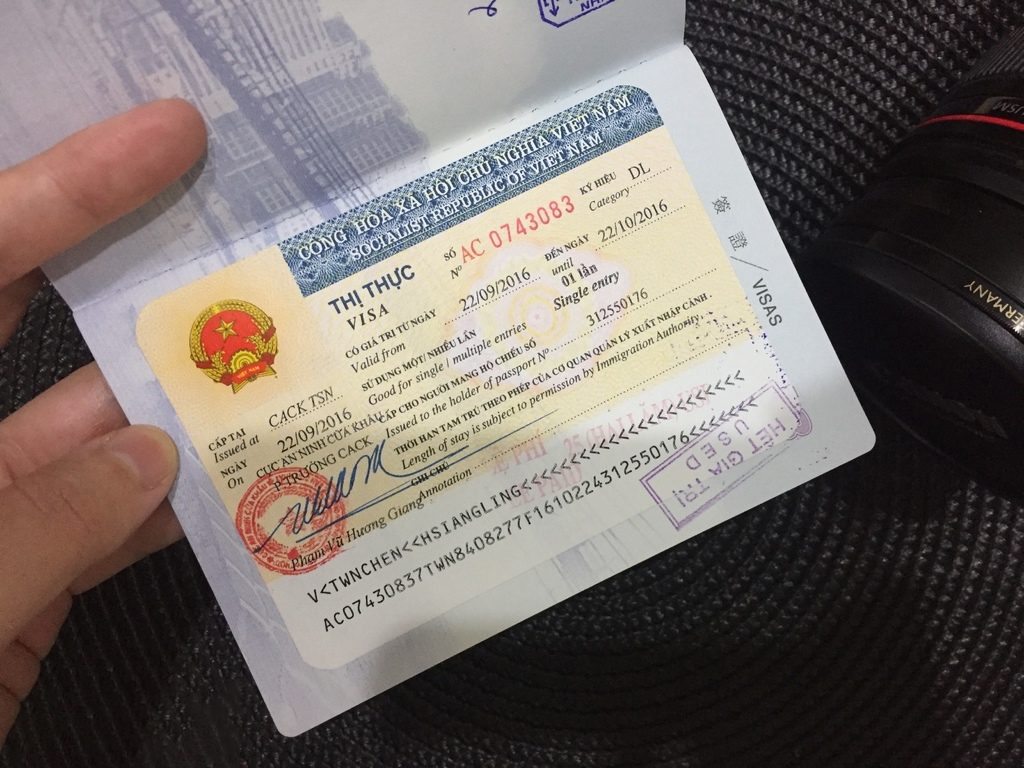
Vietnam E-Visa Entry Requirements 2026: The Only Guide You Actually Need
Reviewed by: Stanley Ho | Last Updated: May 2026
The vietnam visa entry requirements in 2026 are cleaner than they’ve been in years — but they’re also more strictly enforced at the point of boarding, which means travelers who show up with incomplete documents, mismatched names, or blurry passport scans are getting turned away in ways that didn’t happen when immigration systems were more manual. I’ve been in this industry for over two decades, and the pattern I see has shifted: it’s no longer about navigating bureaucratic complexity. The process itself is genuinely simple. What trips people up is the preparation, and that’s what this guide addresses in full.
Before anything else: the old Visa on Arrival approval letter system is completely dead. If you’ve found a guide describing a process where you pay a third-party agency, receive a letter by email, and then exchange it for a stamp at an airport counter — that system is obsolete. Do not book travel based on it. The 90-day Vietnam E-visa, applied for entirely online before departure, is the only standard tourist entry mechanism in 2026 for nationalities that require a visa. Everything else discussed on outdated sites is gone.

Vietnam E-Visa Entry Requirements 2026: The Only Guide You Actually Need
Table of Contents
Step One: Do You Actually Need a Visa?
This is the first question — and the answer is not the same for everyone. Vietnam grants visa-free entry to citizens of a growing number of countries, and the exemption list expanded significantly in 2025. Before you apply for anything, check whether your passport nationality qualifies.
45-day visa-free entry currently applies to citizens of: Germany, France, Italy, Spain, the United Kingdom, Japan, South Korea, Russia, Belarus, Denmark, Norway, Sweden, Finland — and from August 15, 2025 under Resolution 229/NQ-CP, an additional 12 European countries: Belgium, Bulgaria, Croatia, Czech Republic, Hungary, Luxembourg, the Netherlands, Poland, Romania, Slovakia, Slovenia, and Switzerland. This expanded 45-day exemption runs until August 14, 2028.
14 to 30-day visa-free entry applies to most ASEAN member nations including Singapore, Thailand, Malaysia, Indonesia, Philippines, Cambodia, Laos, Myanmar, and Brunei, as well as Chile and a handful of other bilateral agreement countries.
Citizens of all other countries — including the United States, Canada, Australia, India, China, Brazil, and the vast majority of African, Middle Eastern, and remaining Asian nations — must obtain a visa before entering Vietnam. The E-visa is the right tool for virtually all of them.
One important note: even if your nationality qualifies for visa-free entry, that exemption only covers the specified number of days. If you plan to stay longer, you’ll need an E-visa regardless of your passport.
Vietnam E-Visa Entry Requirements: The Complete Checklist
To apply for and successfully use a Vietnam E-visa in 2026, every traveler must meet the following requirements without exception.
Passport validity. Your passport must be valid for at least 6 months beyond your intended date of entry into Vietnam. This is non-negotiable. Airlines check it at boarding. Vietnamese immigration checks it at the border. If your passport expires within 6 months of your arrival date, renew it before you apply for the visa — applying with a nearly-expired passport will result in rejection of the application and, if you somehow board anyway, denial of entry.
Blank passport pages. Your passport must have at least one fully blank page available for the entry stamp. Some sources cite two blank pages; one is the strict minimum, but two is the safe standard. A passport full of stamps and annotations with no usable pages will get you turned around at check-in.
The E-visa document itself. The approved E-visa PDF — either printed on paper or saved clearly on a mobile screen — must be presented at the Vietnamese entry point alongside your passport. Both single-entry and multiple-entry formats are accepted at all international airports, international land border crossings, and international sea ports designated by the Vietnamese government. You are not restricted to a specific entry airport, but you must enter through an officially designated international checkpoint.
Proof of onward travel. While not always formally checked at immigration, airlines routinely require evidence of a departure booking before allowing you to board a flight to Vietnam. Have your return or onward ticket accessible at check-in. A traveler who can’t demonstrate intent to leave within the visa period is a liability for the carrier.
The E-Visa Application: What You’re Actually Submitting
The official Vietnam E-visa portal is evisa.gov.vn (also accessible at evisa.xuatnhapcanh.gov.vn), operated by the Vietnam Immigration Department. You can also apply through trusted service providers like VisaOnlineVietnam if you want professional review before submission. Either way, here is exactly what the application requires:
Your personal information. Full name exactly as it appears on the passport biographical page. Date of birth. Nationality. Passport number. Passport issue and expiry dates. Intended entry date, intended port of entry, and intended length of stay. A temporary residential address in Vietnam — your hotel name and address is sufficient.
A portrait photograph. This must be a recent colour photo taken within the last 6 months. The specifications are precise: white or plain light background, no shadows, full face visible, neutral expression with mouth closed, no glasses, no headwear (religious exceptions apply only when the entire face remains fully unobstructed), minimum 350×350 pixels, JPG format, file size under 1MB. Over 80% of delayed or rejected E-visa applications involve photo errors. This is not an exaggeration — the Vietnamese Immigration Department uses automated systems to scan uploads, and a blurry, shadowed, or incorrectly formatted photo will stall your application silently.
A passport biographical page scan. This is the second most common rejection trigger. The scan must capture the entire biographical page — all four corners visible, no cropping, no fingers obscuring any text, no glare or flash reflection over the laminated surface or the Machine-Readable Zone at the bottom. The scan must be in colour. Black-and-white scans are rejected. The text — your name, passport number, date of birth, nationality, issue date, expiry date — must all be sharply legible. File size under 2MB, JPG format.
Payment. The official government fee is USD 25 for single-entry and USD 50 for multiple-entry, paid online by international credit or debit card at the time of application. These fees are non-refundable regardless of outcome. Service providers charge an additional service fee on top of the government fee for professional handling. There is no additional payment at the Vietnamese border under the E-visa system.
The Name Matching Requirement: The Most Common Crisis
I want to give this its own section because it generates more airport emergencies than any other single issue, and it’s entirely avoidable.
The name on your E-visa application must precisely match the name on the passport biographical page — not your nickname, not the name on your flight booking, not the name on your driver’s licence. The passport biographical page is the single source of truth. Enter exactly what is printed there, character for character, including middle names, hyphens, apostrophes (or their absence in the MRZ), spacing, and any name particles specific to your nationality.
Common name-matching failures by nationality type:
Travelers from Spanish-speaking countries (Peru, Colombia, Mexico, Argentina, Spain) carry two surnames — paternal and maternal. Both must appear in the surname field, in the same order and with the same spacing shown on the passport. Entering only the first surname is among the most common errors for Latin American travelers.
Travelers from Arabic-speaking Gulf countries (Qatar, UAE, Saudi Arabia, Kuwait) carry patronymic chains using bin/bint particles and Al- tribal prefixes. The E-visa must match the romanized version on the passport biographical page exactly — including which generation of the chain is shown and how “bin” is spelled on that specific document.
American travelers frequently omit middle names. If your US passport’s given names field reads “JENNIFER MARIE,” enter both names. Entering only “JENNIFER” creates a mismatch.
New Zealand travelers with Māori names must enter the name without macrons, matching the Machine-Readable Zone version — not the visually correct macronated spelling on the biographical page.
Travelers from any country whose passport was recently renewed with a name change after marriage or a legal name correction must use the new passport name and must not mix elements from old and new documents.
If there is any discrepancy — however minor it looks — between the E-visa name and the passport at the Vietnamese immigration counter, you will be pulled aside for manual verification at best, and denied entry at worst.
Processing Time and When to Apply
Standard E-visa processing takes 3 business days from the date of full and valid submission. During peak travel seasons (Tết holiday, summer, major Vietnamese national holidays), processing can run to 5-7 business days. Apply with a minimum of two weeks’ lead time; one week if you have no flexibility.
Urgent processing options are available from service providers like VisaOnlineVietnam — typically 24 to 48 hours, with Super Urgent priority-channel processing available in 2 to 4 hours for genuine emergencies including travelers stranded at the departure airport with a visa documentation problem.
The E-visa has its own validity window — typically 90 days from the date of issuance — within which you must make your first entry. Do not apply months in advance and expect the visa to still be valid for a later trip; the clock starts at approval, not at travel.
VIP Fast-Track Airport Service: Skip the Queue on Arrival
Having a valid E-visa gets you through the border. Having the VIP Fast-Track service gets you through it in minutes rather than an hour or more.
Peak arrival periods at Tan Son Nhat (SGN) in Hồ Chí Minh City and Noi Bai (HAN) in Hà Nội can produce immigration queues of 60 to 90 minutes when multiple wide-body aircraft arrive simultaneously. The VIP Fast-Track service places a personal concierge at the aircraft gate — before the immigration hall — who escorts you through a dedicated priority lane. No queue, no forms filled out standing up, no waiting behind the full load of four separate flights. Luggage prioritised. You’re in a vehicle to your hotel while standard arrivals are still working through the process.
Available at Noi Bai (HAN), Tan Son Nhat (SGN), and Da Nang International (DAD). For long-haul travelers arriving from the Americas, Europe, the Middle East, or Oceania after 12 to 20 hours of travel, it is the most rational way to start a Vietnam trip.
Frequently Asked Questions
What are the entry requirements for Vietnam in 2026 if my country requires a visa? You need a valid E-visa approved before departure, a passport with at least 6 months’ validity beyond your entry date and at least one blank page, and typically proof of onward travel for your airline check-in. No additional fees are paid at the Vietnamese border — the entire fee is paid online at the time of application.
How much does the Vietnam E-visa cost in 2026? The official government fee is USD 25 for single-entry and USD 50 for multiple-entry, paid online by credit or debit card. The fee is non-refundable. Service providers charge an additional service fee on top of the government fee for professional handling, document review, and monitoring.
Can I get a Vietnam E-visa at the airport? No. The E-visa must be obtained before you travel. There is no visa-on-arrival system in 2026 — any service still describing airport visa processing is referring to an obsolete system. Arrive at your departure airport with an approved E-visa PDF already in hand.
What happens if my E-visa has the wrong name or wrong entry date? Do not attempt to enter with an incorrect E-visa. A name mismatch between the E-visa and your passport will cause problems at the Vietnamese immigration counter ranging from a delay for manual verification to outright denial of entry. If you discover an error before departure, contact our Super Urgent service immediately — a corrected E-visa can be processed through priority channels in 2 to 4 hours in genuine emergencies.
Is the Vietnam E-visa valid at all entry points or only specific airports? As of 2026, the Vietnam E-visa is accepted at all designated international entry points — international airports, international land border crossings, and international sea ports. You are not restricted to the specific entry port you selected during application, but you must enter through any officially designated international checkpoint.
About the Reviewer: Stanley Ho is the CEO of VisaOnlineVietnam and a recognized expert consultant in the international aviation and travel service industry. With decades of experience navigating complex immigration regulations, Stanley and his team specialize in providing seamless visa solutions, fast-track airport services, and emergency travel assistance for global citizens visiting Vietnam.