Vietnam E-Visa for Peruvian Citizens 2026: The Only Guide You Actually Need
If you’re here searching for the Vietnam visa for Peruvian citizens, I want to start by being completely straight with you about what has changed — because the article you probably found before this one is built on a system that no longer exists. Peru doesn’t have a visa exemption agreement with Vietnam. That means every Peruvian national planning to visit — whether for a week on a motorbike through Hội An, a month of street food in Hà Nội, or a proper dive into both — needs valid authorization before boarding any flight headed to Vietnamese airspace.
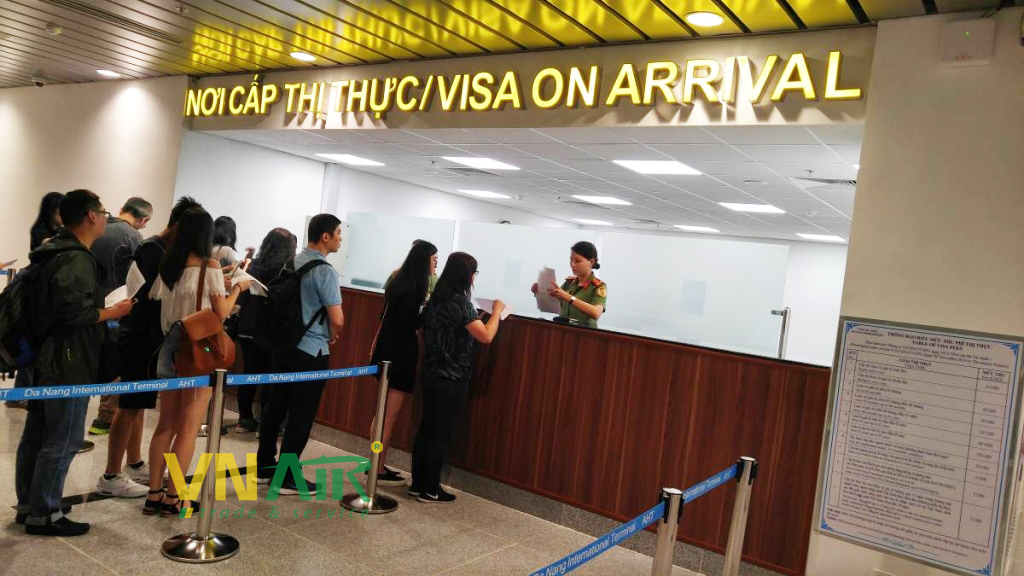
In 2026, that authorization is the 90-day Vietnam E-visa. Full stop. The old Visa on Arrival approval letter system — where you’d pay a third-party agency, receive a letter by email, and then hustle to a dedicated counter at the airport — is dead. Completely finished. Any service still selling you a VOA approval letter is either running on decade-old information or something worse. Do not touch it.
The good news: Peru has strong international connectivity from Jorge Chávez International Airport in Lima, with LATAM, Copa Airlines, and others offering solid routing options toward Vietnam via hubs in Panama City, Dallas, Los Angeles, Seoul, and Tokyo. The journey is long from Lima — that’s just geography — but the visa process doesn’t have to be complicated. Here’s everything you need to know.
Vietnam E-Visa for Peruvian Citizens 2026: The Only Guide You Actually Need
Table of Contents
Vietnam E-Visa Requirements for Peruvian Citizens
The vietnam visa for Peruvian citizens in 2026 takes the form of a single digital document: the E-visa, granting 90 days of stay on either a single-entry or multiple-entry basis. If you’re planning to make a broader Southeast Asia trip — crossing into Cambodia to see Angkor, perhaps, or a side trip into Laos — spring for the multiple-entry option. It costs a little more but saves you the logistical headache of needing a fresh visa for a re-entry.
Document checklist:
- Peruvian passport valid for at least 6 months beyond your intended travel dates in Vietnam
- At least one completely blank page in your passport
- Digital passport photo: color, white background, full face visible, no headwear (religious exceptions allowed if the full face remains unobstructed), taken within the last 6 months
- Clear, sharp scan of your passport biographical data page
- Valid email address for the approval delivery
- International credit or debit card for online payment
Standard processing time is 3 business days. Urgent options exist if you’re applying closer to your departure — typically 24 to 48 hours. Payment is in USD, made at the time of application. There are no additional fees at the Vietnamese airport upon arrival; no cash stamping, no immigration desk transactions. That entire theater is gone with the old system.
Denied Boarding at LIM: What Happens When Your Visa Isn’t Ready
It’s 11 PM at Jorge Chávez International Airport (LIM) in Callao, Lima. Your overnight LATAM connection to Los Angeles — continuing to Incheon and then Hồ Chí Minh City — boards in 90 minutes. The check-in agent scans your Peruvian passport, looks at the E-visa PDF on your phone, and pauses. There’s a name mismatch. The visa reads “GARCIA RODRIGUEZ” in the surname field — exactly one of your two surnames — but your passport clearly shows the full compound surname “GARCIA RODRIGUEZ” across two fields. Or the photo upload silently failed during submission and the approval actually rejected. Or worse, someone filled the form in a hurry and transposed a digit in the passport number.
I’ve taken these calls from travelers at LIM. From Panama City during a stopover. From Seoul Incheon realizing mid-connection that something is wrong with their documentation. The Lima–Vietnam routing is brutal in terms of total travel time; losing a day to a visa error means losing two to three days of your trip once you account for rebooking.
If boarding is denied over a visa documentation issue, stop arguing at the desk and call an emergency service immediately. Our team at VisaOnlineVietnam runs a Super Urgent Visa Service capable of clearing a new E-visa approval through priority channels in 2 to 4 hours — fast enough, in many situations, to catch a same-day rebooked flight.
💡 Expert Insight from Stanley Ho: “Over my 20+ years handling travel logistics, the most frequent disruption occurs at the check-in desk due to simple application formatting errors. If you are stuck at the airport and denied boarding, don’t panic—our emergency team can secure a new E-visa clearance through priority channels within hours, saving your flight.”
The Peruvian Passport Trap: Double-Surname Formatting That Kills Applications
This is the section that matters most for Peruvian travelers specifically — and almost no visa guide written for generic audiences covers it properly.
Peruvian names follow the Spanish two-surname system: every Peruvian carries a paternal surname (first, from the father) and a maternal surname (second, from the mother). So a person named Carlos might be officially registered as Carlos SUÁREZ ABRULU — where SUÁREZ is the paternal surname and ABRULU is the maternal. The full legal name, as it appears on the Peruvian passport, is: Carlos SUÁREZ ABRULU. Both surnames are on the biographical page. Both appear in the Machine-Readable Zone. Both are, legally, the surname.
The Vietnam E-visa portal has a single surname field. This creates an immediate structural problem. What do you enter?
The answer — and this is non-negotiable — is whatever appears in the “Surname” or “Apellidos” field on your passport’s biographical data page, copied character for character. For most Peruvian passports, both surnames appear together in that field: SUÁREZ ABRULU, no hyphen, separated by a space. That entire string goes in the surname field of the E-visa application.
Common mistakes I see from Peruvian applicants:
Entering only the first surname. The instinct to “simplify” for foreign forms is understandable — many Peruvians have been using just the paternal surname on casual international forms for years. But Vietnam immigration doesn’t do informal. If your passport says GARCIA RODRIGUEZ and your visa says GARCIA, you will be flagged at the entry counter.
Adding a hyphen between surnames. Peruvian passports do not hyphenate the two surnames — they’re separated by a space. Introducing a hyphen creates a technical mismatch.
Dropping accent marks. Here’s a subtle one. Spanish accented characters — á, é, í, ó, ú, ñ — appear on Peruvian passports in the visual biographical zone. The Machine-Readable Zone strips them to unaccented equivalents (GARCIA, not GARCÍA; SUAREZ, not SUÁREZ; NUNEZ, not NÚÑEZ). The Vietnam E-visa portal accepts plain Latin characters. Enter the unaccented form — the version you’d see in the MRZ strip — to avoid character-encoding issues that can silently corrupt the application.
The “de” particle after marriage. Peruvian women who’ve legally added a husband’s surname using the “de” construction — for example, María GUITIERREZ PEREZ de HEART — need to enter the full name as it appears on the passport, including the “de.” Abbreviating it creates a mismatch.
When in doubt: open your passport, look at the biographical page, and transcribe mechanically. Don’t interpret. Don’t correct. Don’t simplify.
Skip the Queue: VIP Fast-Track at Vietnam’s Airports
Lima to Vietnam is one of the longer hauls a traveler can make — easily 30-plus hours door to door when you factor in connections through the Americas or Asia Pacific. By the time you clear your final connection and land at Tan Son Nhat International Airport (SGN) in Hồ Chí Minh City or Noi Bai (HAN) in Hà Nội, a 60-to-90-minute general immigration queue is a genuinely miserable way to begin a trip you’ve been planning for months.
The VIP Airport Fast-Track service is the clean solution. A personal concierge meets you at the gate — before the immigration hall, before any queue forms — and walks you through a dedicated priority lane. No waiting behind hundreds of passengers from the same inbound wave. Your luggage is prioritized, the immigration process takes minutes, and you’re in the arrivals hall while the general queue is still on its second page of forms.
The service is available at Noi Bai (HAN), Tan Son Nhat (SGN), and Da Nang International (DAD). For Peruvian travelers who’ve spent the better part of two days getting there, it’s not an indulgence — it’s the rational choice.
How to Apply for Your Vietnam E-Visa in 2026
The application process is straightforward when approached correctly:
- Go to the official Vietnamese immigration E-visa portal (evisa.xuatnhapcanh.gov.vn) or apply through a trusted service like VisaOnlineVietnam for professional name verification and document review before submission.
- Enter your personal details — surnames first, as they appear on the passport biographical page, unaccented, full two-surname string. Given names exactly as printed.
- Upload your passport photo and biographical page scan — both must be clear, properly lit, and within the portal’s size specifications. Low-quality uploads are one of the most common silent rejection causes.
- Select your visa type: single or multiple entry, and processing speed (standard 3 business days or urgent 24-48 hours).
- Pay online by international credit or debit card. Keep the payment confirmation.
- Receive your E-visa approval by email as a PDF document within the stated processing window.
- Print or save digitally — Vietnamese immigration accepts both. Present it alongside your passport at the Vietnamese entry point.
No stamping fee. No approval letter. No additional cash transaction at the airport. This is what the process looks like in 2026.
Frequently Asked Questions
Can Peruvian citizens still use Visa on Arrival for Vietnam in 2026? No — and I want to be absolutely clear on this. The VOA approval letter system is completely obsolete. It is not a valid entry mechanism in 2026. Any website still selling this service to Peruvian travelers is operating on outdated information. The vietnam visa for Peruvian citizens is the 90-day E-visa, applied for entirely online before departure.
Do I need to enter both of my Peruvian surnames on the Vietnam E-visa application? Yes. The E-visa must match your passport exactly. Peruvian passports record both the paternal and maternal surname in the surname field. Both must appear on your E-visa application, in the same order, with the same spacing and without hyphens. Entering only the paternal surname is one of the most common errors we see from Peruvian applicants.
How long is the Vietnam E-visa valid for Peruvian passport holders? The E-visa grants 90 days of stay per entry, with the option for single or multiple entries. The visa’s own validity window is 90 days from the date of issuance — you must make your first entry within that window. For Peruvian travelers planning a broader Southeast Asia itinerary, the multiple-entry option is strongly recommended.
Can I extend my Vietnam E-visa once I’m already in the country? Vietnam does permit visa extensions under certain conditions, processed through local immigration offices. Extensions are not guaranteed and depend on current policy at the time of application. For stays beyond 90 days, the more reliable approach is a border run to Cambodia or Laos followed by re-entry on a fresh E-visa, provided you selected the multiple-entry option initially.
Is the Vietnam E-visa accepted at all entry points, including overland crossings? Yes. As of 2026, the E-visa is valid at all designated international entry points in Vietnam — international airports, international land border crossings, and international sea ports. You are not restricted to specific airports, which gives Peruvian travelers flexibility in their itinerary design.
About the Reviewer: Stanley Ho is the CEO of VisaOnlineVietnam and a recognized expert consultant in the international aviation and travel service industry. With decades of experience navigating complex immigration regulations, Stanley and his team specialize in providing seamless visa solutions, fast-track airport services, and emergency travel assistance for global citizens visiting Vietnam.