Vietnam Entry Guide for Foreign Investors, Experts & Business Managers (2026)
As Vietnam continues to position itself as a premier manufacturing and tech hub in Asia, the demand for high-level international talent and capital is unprecedented. In 2026, the Vietnamese government has further streamlined the immigration pathways to ensure that foreign investors, experts, skilled workers, and business managers can enter and operate within the country with maximum efficiency.
Whether you are a Danish executive overseeing a new green-energy project, a tech expert from Copenhagen, or a multinational corporation deploying skilled workers to Ho Chi Minh City or Binh Duong, this comprehensive guide outlines the legal framework for your entry and residency in Vietnam.

Table of Contents
1. Who Qualifies as High-Level Personnel?
Vietnamese immigration and labor laws strictly categorize foreign professionals to ensure they add specialized value to the economy:
Foreign Investors: Individuals who contribute capital to establish or operate a company in Vietnam. Visas are tiered based on the investment amount (from under 3 billion VND to over 100 billion VND).
Experts: Professionals possessing a university degree (or higher) and at least 3 years of work experience relevant to their intended job role in Vietnam.
Skilled Workers: Individuals with specialized training (at least 1 year) and a minimum of 3 years of practical experience in their specific field.
Business Managers/Executives: Chief Executive Officers (CEOs), legal representatives, or directors who hold managerial positions within an enterprise.
2. The 3-Step Immigration Framework (2026)
For high-level personnel planning long-term employment or investment, entering Vietnam is a multi-step process.
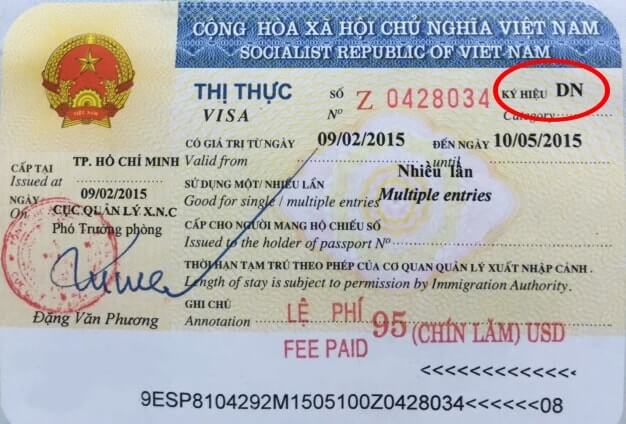
Step 1: The Corporate Visa (DN, ĐT, or LĐ Visa)
You cannot enter on a standard tourist E-visa to work legally. Your sponsoring company in Vietnam must apply for an entry clearance (Approval Letter) using Form NA2 at the Vietnam Immigration Department.
DN Visa (Business): For short-term meetings, signing contracts, or setting up a company (valid up to 90 days).
ĐT Visa (Investor): Specifically for foreign investors.
LĐ Visa (Labor): Issued to foreigners coming to work under an employment contract.
Step 2: The Work Permit (Giấy Phép Lao Động)
Once inside Vietnam on a DN or LĐ visa, experts and skilled workers must apply for a Work Permit through the Department of Labor, Invalids and Social Affairs (DOLISA).
Exception: Foreign investors (depending on capital), CEOs of joint-stock companies, and certain short-term experts may be eligible for a Work Permit Exemption Certificate.
Step 3: The Temporary Residence Card (TRC)
After securing a Work Permit or Exemption, professionals can apply for a Temporary Residence Card (TRC). A TRC replaces the visa, allowing multiple entries and a continuous stay of 1 to 5 years, depending on the visa category.
3. Detailed Visa Categories for Professionals
Understanding the correct visa symbol is crucial for corporate compliance in 2026:
LĐ1 (Labor 1): For foreigners working in Vietnam who are exempt from a work permit.
LĐ2 (Labor 2): For foreigners working in Vietnam who require a work permit.
ĐT1 (Investor 1): For investors contributing over 100 billion VND. (Eligible for up to a 5-year TRC).
ĐT2, ĐT3, ĐT4: For investors with smaller capital contributions. Note: ĐT4 (under 3 billion VND) is valid for a maximum of 12 months and does not qualify for a TRC.
4. Support for Nordic & Danish Enterprises
For companies based in Denmark and the broader Nordic region, deploying staff to Vietnam requires precise coordination.
Document Legalization: Degrees, police checks, and experience letters issued in Denmark must be legalized by the Danish Ministry of Foreign Affairs and subsequently stamped by the Vietnam Embassy in Hellerup, Copenhagen before they can be used for Work Permit applications in Vietnam.
Direct Assistance: Our corporate visa team assists Danish enterprises—from wind-energy firms in Hai Phong to manufacturing plants in southern Vietnam—in fast-tracking the NA2 sponsorship process and securing landing visas for urgent corporate deployments.
5. Frequently Asked Questions (FAQ)
Q: Can an expert enter Vietnam on a 90-day E-visa and convert it to a Work Visa later? A: No. In 2026, converting a tourist visa to a working visa inside Vietnam is not permitted. You must have your Vietnamese sponsor apply for a Business/Labor Approval Letter, and you must enter the country under the correct visa category.
Q: Can family members accompany foreign experts to Vietnam? A: Yes. Spouses and children (under 18) of foreign investors, experts, and managers who hold a valid TRC or long-term visa can be sponsored for a Dependent Visa (TT) or a Dependent TRC.
Q: How long does it take to process an entry permit for a skilled worker? A: If the company is already registered with the Immigration Department, the entry Approval Letter takes about 3-5 business days. Securing the subsequent Work Permit and TRC takes an additional 3-5 weeks once inside Vietnam.