Vietnam E-Visa for Comoros Citizens 2026: The Only Guide You Actually Need
If you’re researching the Vietnam visa for Comoros citizens in 2026, you’re already doing better than the dozens of travelers I’ve seen stranded at check-in desks holding outdated paperwork that no immigration officer will touch. Vietnam is one of Southeast Asia’s most rewarding destinations — the food, the coastline, the sheer density of things to see per square kilometer. But getting there from the Comoros archipelago requires some planning that most travel blogs completely ignore.
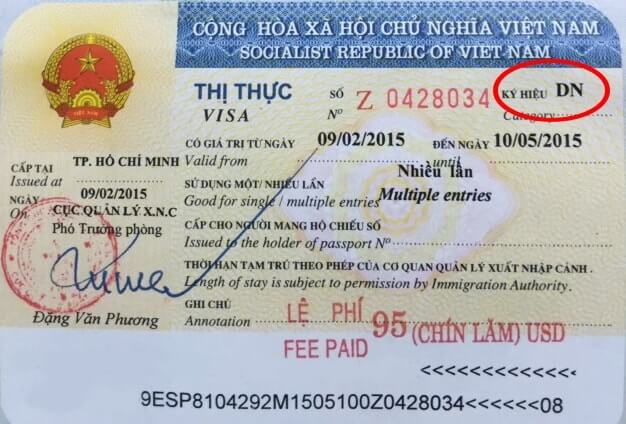
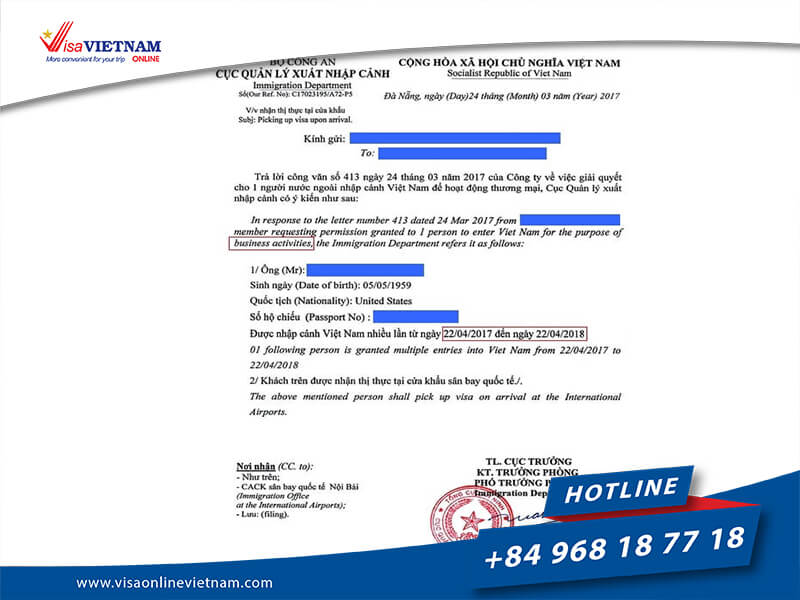
Let me be direct about something first. The old Visa on Arrival approval letter system — the one where you’d pay a “service fee,” receive a letter by email, then scramble to get a stamp at the airport — is gone. Done. Finished. Any website still selling that process to you in 2026 is either dangerously outdated or actively misleading you. The only legal entry mechanism for Comorian passport holders is the 90-day Vietnam E-visa, which is digital, clean, and surprisingly straightforward when you know what to expect.
Vietnam and Comoros don’t share a visa exemption agreement, which means citizens of the Union of the Comoros — whether you hold a Grande Comore, Anjouan, or Mohéli-issued document — must obtain authorization before boarding any flight toward Hanoi, Ho Chi Minh City, or Da Nang. This isn’t a bureaucratic inconvenience. It’s just the process, and done right, it takes less than a week.
Table of Contents
Vietnam E-Visa Requirements for Comoros Citizens
The Vietnam E-visa grants Comorian nationals 90 days of stay on a single entry or multiple-entry basis. For most leisure travelers — even those who want to dip into neighboring Laos or Cambodia and return — the multiple-entry option is worth the marginal additional cost. Here’s what the vietnam visa for Comoros citizens process actually demands from you:
Document checklist:
- Comorian passport with minimum 6 months validity beyond your intended travel dates
- At least one completely blank page in your passport
- Digital passport photo: color, white background, full face, no headwear (religious exceptions apply if the face remains fully visible), taken within the last 6 months
- Clear scan of the passport biographical data page
- Valid email address to receive your approval
- Payment via international credit or debit card
Processing under standard service runs 3 business days. If your travel window is tighter, urgent processing options exist — typically 24 to 48 hours. The fee is denominated in USD and payable online; there are no additional stamping fees at Vietnamese airports under the E-visa system (another relic of the old VOA era that thankfully died with it).
Denied Boarding at HAH: What Happens When Your Visa Isn’t Ready
Picture this. It’s early morning at Prince Said Ibrahim International Airport (HAH) in Moroni. You’re checked in, bags tagged, boarding pass in hand. The check-in agent runs your documents. Then she pauses. Picks up the phone. Your stomach drops. The E-visa confirmation email is in your inbox — but the approval code isn’t loading, or worse, the name on the visa doesn’t match the passport exactly. Your flight to Addis Ababa (connecting to Ho Chi Minh City) departs in under three hours.
This is not a hypothetical. I’ve been called by panicked travelers in exactly this situation more times than I care to count.
If you’re denied boarding because of a visa documentation issue, do not waste time arguing at the desk. Call an emergency visa service immediately. Our team at VisaOnlineVietnam runs a Super Urgent Visa Service capable of clearing a new E-visa approval through priority channels in 2 to 4 hours — enough time, in many cases, to make a rebooked flight the same day. It’s not cheap. It’s not fun. But it saves the trip.
💡 Expert Insight from Stanley Ho: “Over my 20+ years handling travel logistics, the most frequent disruption occurs at the check-in desk due to simple application formatting errors. If you are stuck at the airport and denied boarding, don’t panic—our emergency team can secure a new E-visa clearance through priority channels within hours, saving your flight.”
The Comorian Passport Trap: Name Formatting Errors That Kill Applications
This is the part most guides skip. It’s also the part that causes the most rejections.
Comorian passports present a very specific challenge that I want to flag clearly: the romanization problem. Arabic script — which underpins most Comorian names — does not map cleanly to the Latin alphabet. Names are transcribed using French phonetic conventions (Comoros is a francophone nation), which means the same underlying Arabic name can appear as “Abdallah,” “Abdoulah,” or “Abdalah” depending on who issued the document and when. The Vietnam E-visa portal, however, demands an exact match with what’s printed in the Latin script section of your passport. No interpretation, no approximation.
Common issues I see specifically with Comorian passport holders:
“BEN” vs. “BIN” vs. “IBN”: The Arabic connective particle meaning “son of” appears in many Comorian names. Your passport might render it as “Ben” (French convention) while an older document renders it “Bin.” If you’ve ever renewed your passport and the romanization shifted — even slightly — that’s a mismatch waiting to happen on a visa application.
Double-barreled given names: Names like “Mohamed Ali” or “Said Ahmed” are extremely common in Comoros. The E-visa portal has a single “given name” field. Whether you enter both names, hyphenate them, or choose one will affect whether the system flags your entry. The rule: enter exactly what appears in your passport’s Latin-script section, including spaces, hyphens, or combined forms — nothing more, nothing less.
“El” and “Al” prefixes: Names beginning with the Arabic definite article (Al-Amine, El-Ansari) sometimes appear with the article attached, sometimes separated by a hyphen, and occasionally dropped entirely in the Latin transliteration. Whatever your passport says, that’s what goes on the form.
When in doubt, submit a passport scan alongside your application and let a professional agent verify the name entry before it’s submitted. A $20 name-check service has saved more than a few $800 flights.
Skip the Queue: VIP Fast-Track at Vietnam’s Airports
Comorian travelers typically route through Addis Ababa (ADD) or Nairobi (NBO) on Ethiopian Airlines or Kenya Airways before connecting to Vietnam. Those are long, grinding itineraries. By the time you land at Tan Son Nhat International Airport (SGN) in Ho Chi Minh City or Noi Bai (HAN) in Hanoi, the last thing you want is a 90-minute immigration queue filled with package tourists all arriving on the same three flights.
The VIP Airport Fast-Track service solves this cleanly. A personal concierge meets you at the aircraft gate — before the immigration hall — and escorts you through a dedicated diplomatic or priority lane. No queue. No waiting behind four hundred people all fumbling with the same immigration forms. Your bags are prioritized, the process takes minutes, and you’re in a taxi while everyone else is still standing.
It’s available at Noi Bai (HAN), Tan Son Nhat (SGN), and Da Nang International (DAD). For business travelers, it’s a no-brainer. For anyone doing a long-haul connection from the Indian Ocean through East Africa, I’d argue it’s simply the rational choice.
How to Apply for Your Vietnam E-Visa in 2026
The application itself is not complicated when you approach it systematically. Here’s the exact sequence:
- Go to the official Vietnamese government portal (evisa.xuatnhapcanh.gov.vn) or use a trusted service like VisaOnlineVietnam if you want professional name-verification and document review.
- Fill in your personal details — pay particular attention to name formatting (see the section above — this is where most Comorian applications stumble).
- Upload your passport photo and passport scan — both must be clear, well-lit, and within size specifications. Blurry photos are the second most common rejection reason after name mismatches.
- Select your visa type: single entry or multiple entry, and your processing speed.
- Pay online by credit or debit card. Keep the transaction confirmation.
- Wait for the approval email — 3 business days for standard processing, 24-48 hours for urgent. The approval arrives as a PDF.
- Print or save digitally — Vietnamese immigration accepts both printed and mobile-screen versions of the E-visa approval document.
When you arrive at the Vietnamese port of entry, present your passport and the E-visa approval together. That’s it. No stamping fee, no additional desk, no approval letter theatrics. This is what a modern visa system looks like.
Frequently Asked Questions
Can Comoros citizens still get a visa on arrival in Vietnam in 2026? No — and I want to be emphatic here. The VOA approval letter system that operated through third-party agencies is completely obsolete. It no longer functions as a legal entry mechanism. Any service still advertising it is selling you something that will get you denied boarding. The Vietnam E-visa is the only tourist entry pathway in 2026.
How long is the Vietnam E-visa valid for Comorian passport holders? The E-visa grants 90 days of stay per entry, with the option for single or multiple entries. The visa itself has a validity window of 90 days from the date of issue, within which you must make your first entry. For most travelers, this is more than sufficient.
My name on my Comorian passport uses French romanization — will that cause problems? It can, if not handled carefully. The Vietnam E-visa system checks the name you enter against the passport’s Latin-script biographical page. As long as you copy exactly what’s printed there — including “Ben” vs. “Bin,” prefixes, hyphenation, and spacing — you’ll be fine. The problem arises when applicants enter a “cleaner” version of their name rather than the literal text in the document.
Can I extend my Vietnam E-visa once I’m already in the country? Vietnam does allow for visa extensions under certain conditions, processed through local immigration offices. However, extensions are not guaranteed and are subject to current policy at the time of your stay. For stays beyond 90 days, it’s generally more reliable to plan a border run to a neighboring country (Cambodia, Laos) and re-enter on a fresh E-visa — if you’ve selected the multiple-entry option.
Is the Vietnam E-visa accepted at all entry points? Yes. As of 2026, the E-visa is valid at all international airports, all international land border crossings, and all international sea ports designated by the Vietnamese government. You are not restricted to specific entry points.
About the Reviewer: Stanley Ho is the CEO of VisaOnlineVietnam and a recognized expert consultant in the international aviation and travel service industry. With decades of experience navigating complex immigration regulations, Stanley and his team specialize in providing seamless visa solutions, fast-track airport services, and emergency travel assistance for global citizens visiting Vietnam.